No Strategy Perhaps the biggest risk in social media marketing is diving in without a strategy. Too often, companies jump on the bandwagon without first developing a plan. The second worse risk is having the wrong strategy. A social media marketing strategy requires research, observing and planning in order to develop a plan which can succeed and can be measured.
Another risk marketers run is to ignore social media. I often hear from marketers “we plan to get into social media somewhere down the road.” That’s not a bad strategy if they are listeners in social media. But, if they are totally ignoring the existing communities and conversations already taking place, they are potentially ignoring threats and opportunities TODAY.
Lack of Understanding I believe the biggest risk any organization faces when considering using social media is a lack of understanding its potential and the (mostly) unwritten rules of social media marketing. The interesting thing about this comment is that social media is an evolving platform, yet there are fundamental components and characteristics in place which are very black and white (with a few shades of gray). Organizations who come to understand the social, viral and technological characteristics of social media have the greatest potential to achieve positive experiences.
Lack of Top Down Support Understanding social media starts at the top of any organization. Isn’t that usually true of most new business ventures? For a large corporation with thousands of employees, it’s not totally necessary for the CEO to understand social media for successful experiences. Staffers can experiment with social media, but they risk getting embarrassed if something goes awry and the CEO learns of it. In fact, the possibility of the CEO learning about a negative experience from social media is extremely high due to its pervasive nature. So, while I believe the CEO doesn’t necessarily need to be on board with a social media experiment in large corporations, I strongly advise it.
Abandonment Throughout the course of history, there are countless failed marketing experiments. As consumers we have been witness to some failed marketing experiments – remember the DeLorean car? How many Super Bowl commercials can you remember from companies still in business (other than Budweiser)? And, of course, there are gazillions of failed marketing experiments we’ve never heard of in market niches with no consumer exposure. So, it behooves most organizations to venture into social media conservatively. I’m talking about the proverbial dipping your toe in the social media waters.
Poor Allocation of Time and Resources Another risk is not spending enough time at it. Organizations that choose to embark in a social media strategy must allocate time to it. When it is considered additive, the risk of abandonment is high.
Poor Definition of Roles A related risk is not redefining job roles to reflect a commitment to using social media. If you consider social media marketing additive, then who do you add it to? Once a social media plan has been developed, or a successful trial has been completed and you’re ready to commit more to a social media plan, I recommend a formal review of people’s job description and in most cases revising job descriptions.
Not Having the Right People on the Bus Once the roles have been defined, documented, discussed and everyone is on board, the heavy lifting begins. In most cases, some heavy lifting has been in place for some time, but now you are in a better position to turn it up a notch. But, what if you realize you don’t have the right staff for social media marketing? The fact is some people just don’t understand social media. Sometimes the barrier is demographic, but most often it’s just a “don’t get it” mentality. Or, worse yet, some may just resist it for any number of reasons. There are still many people who are stuck in a paradigm, and they are not ready to shift to the social media paradigm.
It’s your job to recognize who may embrace using social media and who may shun it. If you are not the manager and you want to convince management to begin using social media, you may have a tall task ahead of you. But, you should look for the same openings I’m describing here.
Measuring Results Poorly As your social media strategy progresses, you want to measure progress or results. A big risk is measuring the wrong metrics or not measuring at all. The key is to develop a strategy that allows you to measure something that is meaningful. Measuring the wrong metrics that don’t correlate to your strategy is potentially dangerous. Likewise, attempting to measure prematurely is potentially dangerous. Depending on your social media strategy, results can take months to develop and to blossom. Measuring results over a sustained period of time is the key to measurement that matters.
There are risks in using social media, but the potential benefits are outstanding. The risks outlined here should not dissuade any marketer from harnessing the collective power of social media.
No Strategy Perhaps the biggest risk in social media marketing is diving in without a strategy. Too often, companies jump on the bandwagon without first developing a plan. The second worse risk is having the wrong strategy. A social media marketing strategy requires research, observing and planning in order to develop a plan which can succeed and can be measured.
Another risk marketers run is to ignore social media. I often hear from marketers “we plan to get into social media somewhere down the road.” That’s not a bad strategy if they are listeners in social media. But, if they are totally ignoring the existing communities and conversations already taking place, they are potentially ignoring threats and opportunities TODAY.
Lack of Understanding I believe the biggest risk any organization faces when considering using social media is a lack of understanding its potential and the (mostly) unwritten rules of social media marketing. The interesting thing about this comment is that social media is an evolving platform, yet there are fundamental components and characteristics in place which are very black and white (with a few shades of gray). Organizations who come to understand the social, viral and technological characteristics of social media have the greatest potential to achieve positive experiences.
Lack of Top Down Support Understanding social media starts at the top of any organization. Isn’t that usually true of most new business ventures? For a large corporation with thousands of employees, it’s not totally necessary for the CEO to understand social media for successful experiences. Staffers can experiment with social media, but they risk getting embarrassed if something goes awry and the CEO learns of it. In fact, the possibility of the CEO learning about a negative experience from social media is extremely high due to its pervasive nature. So, while I believe the CEO doesn’t necessarily need to be on board with a social media experiment in large corporations, I strongly advise it.
Abandonment Throughout the course of history, there are countless failed marketing experiments. As consumers we have been witness to some failed marketing experiments – remember the DeLorean car? How many Super Bowl commercials can you remember from companies still in business (other than Budweiser)? And, of course, there are gazillions of failed marketing experiments we’ve never heard of in market niches with no consumer exposure. So, it behooves most organizations to venture into social media conservatively. I’m talking about the proverbial dipping your toe in the social media waters.
Poor Allocation of Time and Resources Another risk is not spending enough time at it. Organizations that choose to embark in a social media strategy must allocate time to it. When it is considered additive, the risk of abandonment is high.
Poor Definition of Roles A related risk is not redefining job roles to reflect a commitment to using social media. If you consider social media marketing additive, then who do you add it to? Once a social media plan has been developed, or a successful trial has been completed and you’re ready to commit more to a social media plan, I recommend a formal review of people’s job description and in most cases revising job descriptions.
Not Having the Right People on the Bus Once the roles have been defined, documented, discussed and everyone is on board, the heavy lifting begins. In most cases, some heavy lifting has been in place for some time, but now you are in a better position to turn it up a notch. But, what if you realize you don’t have the right staff for social media marketing? The fact is some people just don’t understand social media. Sometimes the barrier is demographic, but most often it’s just a “don’t get it” mentality. Or, worse yet, some may just resist it for any number of reasons. There are still many people who are stuck in a paradigm, and they are not ready to shift to the social media paradigm.
It’s your job to recognize who may embrace using social media and who may shun it. If you are not the manager and you want to convince management to begin using social media, you may have a tall task ahead of you. But, you should look for the same openings I’m describing here.
Measuring Results Poorly As your social media strategy progresses, you want to measure progress or results. A big risk is measuring the wrong metrics or not measuring at all. The key is to develop a strategy that allows you to measure something that is meaningful. Measuring the wrong metrics that don’t correlate to your strategy is potentially dangerous. Likewise, attempting to measure prematurely is potentially dangerous. Depending on your social media strategy, results can take months to develop and to blossom. Measuring results over a sustained period of time is the key to measurement that matters.
There are risks in using social media, but the potential benefits are outstanding. The risks outlined here should not dissuade any marketer from harnessing the collective power of social media.
I think it’s safe to say that social media has taken over almost everyone’s life.
How many times a day do you open Instagram or Facebook casually just to see what your friends are up to? I know I’m on there at least 20 times a day mindlessly scrolling and brands are smart, they’ve caught on to this behavior.
That’s why while you’re scrolling through your friends post you’re likely to see a brand’s pop in there every so often.
Typically they’re easy to pass over, but then there are some that really catch your attention. that’s the whole goal, right?
But, what if they catch your attention for the wrong reason? Like offending your values or making you feel totally alienated from their brand?
Brands, big and small, make mistakes on social media all the time and in today’s age, they are certainly never forgotten.
1.Would You Rather: Rihanna
Ever since they updated their layout and upset almost all of their users, Snapchat has been losing popularity.
One feature of the new update is the prominence of more ads. Now, as you’re viewing stories, brands ca interject their ads between each user. Typically, they keep it to brands that are relevant to you, but then there’s this ad for a game called Would You Rather?:
The ad asks users if they’d rather Slap Rihanna or Punch Chris Brown, which directly relates to the domestic abuse case from 2009 where Chris Brown physically assaulted Rihanna.
With users already criticizing Snapchat because of their recent updates, the backlash from this was huge! Snapchat removed the ad and then issued this apology “The advert was reviewed and approved in error, as it violates our advertising guidelines. We immediately removed the ad last weekend, once we became aware. We are sorry that this happened.”
Even with the apology usage of the app is still on the decline and taught us the valuable lesson to be careful of crossing the line between funny and hurtful.
2. Dove: Transformation
Normally, Dove is known for empowering women and focusing on natural, realistic standards of beauty.
The company has been standing on its Real Beauty platform for over 10 years and, most of the time, it’s proven successful. Take, for example, successful campaigns like “Real Beauty Sketches” and “Evolution” that focus on making women feel proud of the way they look.
Unfortunately, in a recent post on Facebook by the company, they’ve taken a ton of steps backward.
The ad in question shows a black woman transformed into a white woman after using Dove body lotion.
This totally goes against their brand message of saying that all beauty is real beauty by showing a woman transforming into an entirely different race after using their product.
It doesn’t fit with their overall brand messaging and both alienates and insults a large part of their audience.
After receiving backlash from women of all races saying the ad made them angry and uncomfortable, Dove removed it from Facebook and released this statement:
As we’ve seen with all the other ads, the apology doesn’t do much but the ad does teach us to always review your content through a critical lens. Make sure that it doesn’t offend or in this case, totally go against what your brand represents.
3.New York Times: Snake People
The New York Times is known for being one of the top newspapers in the world, but that doesn’t mean it’s exempt from some social media fails.
The editor who worked on the article has a browser extension called “Millennials to Snake People,” which changes the word “millennials” to “Snake People,” which means every time the word millennial was referenced in the above article, it was changed to the phrase snake people causing a lot of people to be utterly confused as they read the article.
The article with the errors was released exclusively online across the company’s social channels making it an easy target for criticism.
The New York Times and the editor himself issued an apology on Twitter
User-generated content is all about sharing photos and posts that your customers have created for you. It makes your own content planning much easier and can play a large role in creating a compelling social strategy.
This is because user-generated content helps to really engage and build a community around a brand. People are happy and excited to share photos of their products if they think the business might see it, and especially if they might share it.
This helps your business’s marketing strategy in a multitude of ways. First of all, you’re not having to create as many assets, take as many photos or spend as much time on content creation when your customers are doing that for you. Second of all, you’re interacting with your customers on a personal level when you share their photo on your business’s feed.
And finally, you’re building a bigger audience when your customers share photos of your products and tag your business in them. Sounds like a win-win situation to me!
One brand that’s really killing it with their user-generated content is Cupshe. Cupshe is a swimsuit brand that focuses almost exclusively on user-generated content in their Instagram strategy.
First things first, they let their followers know exactly how to be featured: by tagging @cupshe in their photos.
For your own brand, you can emulate this strategy by following two different methods: either through tagging or through hashtags.
2. Humor – MoonPie
We all love some good brand humor – and Twitter is the perfect place to find it. It’s no secret that brands love to have fun on the microblogging platform, and MoonPie has established itself as a fan favorite.
When it comes to creating a successful Twitter presence for your business, it’s imperative to insert some personality into your tweeting. With only 280 characters per post, you have to give each one as much oomph as you’ve got.
And MoonPie has this down to an art by injecting authentic humor into their marketing strategy.
When working on a Twitter marketing strategy, ask yourself: what makes someone want to follow an account? By considering the audience, you will be able to indicate the edge that your brand can offer to get Twitter users to follow your brand.
Cross-channel marketing or multi-channel marketing is the practice of using multiple channels to reach an audience. Because not everyone uses every single platform, it’s a good idea to have a presence on a few, and share some of the same content across the different networks.
Casper does a great job of this. But what I love most about their marketing is their choice of platforms.
Of course, they’re using your basics like Facebook, Instagram and Twitter. But I’m especially loving their clever use of Spotify, YouTube and IGTV to showcase their brand new Casper Sleep Channel.
Finding unique ways to really stand out among the competition is key to a successful digital marketing strategy. For example, their new Casper Sleep Channel is filled with soothing sounds that help their customers drift soundly to sleep. All while sleeping on their Casper mattress, naturally.
The company shares each new Sleep Channel episode on all three video/music platforms (Spotify, YouTube & IGTV) while also promoting a teaser on their other social media profiles. This is the perfect way to generate buzz around their sleep channel, increase their following on other platforms and cross-promote content.
Cross promoting content may seem like a time-intensive task, but utilizing a social media management tool will make it easy.
Sprout Social’s publishing feature enables social media managers to effectively plan and schedule cross-channel content in a timely manner.
If your business is using social media—or getting ready to—you need a social media policy.
These guidelines outline how your business and its employees should use social media responsibly. This will not only protect your from security threats, but bad PR or legal trouble as well.
At minimum, your social media policy should include:
Brand guidelines that explain how to talk about your company on social
Rules related to confidentiality and personal social media use
Which departments or team members are responsible for each social media account
Guidelines related to copyright and confidentiality
Guidelines on how to create an effective password and how often to change passwords
Expectations for keeping software and devices updated
How to identify and avoid scams, attacks, and other security threats
Who to notify and how to respond if a social media security concern arises
2. Train your staff on social media security best practices
Even the best social media policy won’t protect your organization if your employees don’t follow it. While your policy should be easy to understand, training will give employees the chance to engage, ask questions, and get a sense of how important it is to follow.
These training sessions are also an opportunity to review the latest threats on social, and talk about whether there are any sections of the policy that need updating.
And it’s not all doom and gloom. Social media training also equips your team to use the tools effectively. When employees understand best practices, they’ll feel confident using social for both personal and professional purposes.
3. Limit social media access
While you may be focused on threats coming from outside your organization, PriceWaterhouseCoopers found employees are more likely to cause cyber security incidents than are hackers. Limiting access to your social accounts is the best way to keep them secure.
You may have whole teams of people working on social media messaging, post creation, or customer service. But that doesn’t mean everyone needs the ability to post. And it doesn’t mean that everyone needs to know the passwords to your social accounts.
The first line of defense is to limit the number of people who can post on your accounts. Think carefully about who needs posting ability and why.
Once you’ve decided who can post, use software like Hootsuite to give the right people the right account access. This way, they never need to know the individual login information for any social network account. If the person leaves your company, you can disable their account without having to change all the social networks passwords.
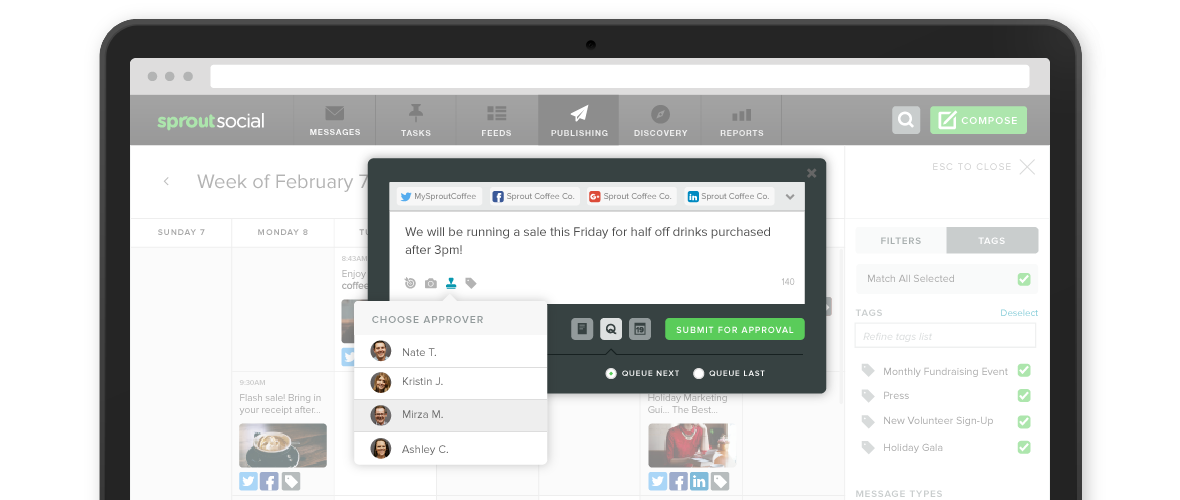
4. Set up a system of approvals for social posts
Z-Burger recentlyfaced a major crisis after a marketing contractor used a photo of a slain journalist in an extremely inappropriate Twitter post. No one at Z-Burger saw the tweet before it was posted, since they had given the contractor the ability to publish directly to their account.
The owner of Z-Burger was horrified when he saw the tweet and took action to delete the offensive post right away. But if he had set up an approval system, he or his staff would have reviewed the tweet before it was published. And the crisis would have been averted.
You can use Hootsuite to give employees or contractors the ability to draft messages, preparing them so they’re all set to post at the press of a button. But leave that last button press to a trusted person on your team.
5. Put someone in charge
Designating a key person as the eyes and ears of your social presence can go a long way towards mitigating risks. This person should own your social media policy, monitor your brand’s social presence, and determine who has publishing access. This person should also be a key player in the development of your social media marketing risks.
This person will likely be a senior person on your marketing team. But they should maintain a good relationship with your company’s IT department to ensure marketing and IT work together to mitigate risk.
This person is also who team members should turn to if they ever make a mistake on social that might expose the company to risk of any kind—from security to a damaged reputation. This way the company can initiate the appropriate response.
6. Monitor your accounts and engage in social listening
As mentioned at the start, unattended social accounts are ripe for hacking. Keep an eye on all of your social channels—from the ones you use every day to the ones you’ve registered but never used at all. Assign someone to check that all of the posts on your accounts are legitimate. Cross-referencing your posts against your content calendar is a great place to start.
Follow up on anything unexpected. Even if a post seems legitimate, it’s worth digging into if it strays from your content plan. It may be simple human error. Or, it may be a sign that someone has gained access to your accounts and is testing the water before posting something more malicious.
You also need to watch for imposter accounts, inappropriate mentions of your brand by employees (or anyone else associated with the company), and negative conversations about your brand.
7. Invest in security technology
No matter how close an eye you keep on your social channels, you can’t monitor them 24 hours a days—but software can. Solutions like ZeroFox will automatically alert you of security risks.
When you integrate ZeroFOX with your Hootsuite dashboard, it will alert you to dangerous, threatening, or offensive content targeting your brand; malicious links posted on your social accounts; scams targeting your business and customers; and fraudulent accounts impersonating your brand. It also helps protect against hacking and phishing attacks.
8. Perform a regular audit
Social media security threats are constantly changing. Hackers are always coming up with new strategies, and new scams and viruses can emerge at any time. Scheduling regular audits of your social media security measures will help keep you ahead of the bad actors.
At least once a quarter, be sure to review:
Social network privacy settings. Social media companies routinely update their privacy settings, which can have an impact on your account. For example, a social network might update its privacy settings to give you more precise control over how your data is used.
Access and publishing privileges. Perform a scan of who has access to and publishing rights on your social media management platform and social accounts and update as needed. Make sure all former employees have had their access revoked, and check for anyone who’s changed roles and no longer needs the same level of access.
Recent social media security threats. Maintain a good relationship with your company’s IT team so they can keep you informed of any new social media security risks they become aware of. And keep an eye on the news—big hacks and major new threats will be reported in mainstream news outlets.
Your social media policy. This policy should evolve over time as new networks gain popularity, security best practices change, and new threats emerge. A quarterly review will make sure this document remains useful and helps to keep your social accounts safe.
Businesses are increasingly reliant on social media as an advertising channel, a way to connect with customers, and a means to gain valuable market insights.
The reputational risks of social media are one aspect, with a few social media campaign ‘fails’ causing uproar over the years.Yet there are legal risks too.
Though the legal risks are not necessarily unique to an online platform, when considering how quickly and easily social media can ‘go viral’, it is important that businesses put in place both preventative and reactive ways of mitigating these risks.
Some potential legal risks external to the platform that can occur where a business uses social media, including copyright infringement, misleading conduct, privacy & confidentiality, defamation and non-compliance with advertising standards.
1. Copyright infringement
Businesses may be led into thinking that because a photograph, for example, is made available on the internet or is subject to a creative commons licence only, it is free for them to use, no further questions asked.
Rarely is this the case.
Whilst exceptions to copyright law and within a licence may make material available for certain uses, including for personal use, usually these restrictions will not apply for commercial use, including where used in an advertising or branding campaign.
Also, if the business is using music on its social media platforms, always consider whether a music licence is required and has been obtained.
Clearances for all third party materials should be obtained where used as part of a social media campaign, just as they would be for a print campaign.
Be somewhat sceptical of anything claimed to be ‘free’, and consider having the licence terms reviewed for conditions around attribution or restrictions on commercial use.
Businesses should also consider whether the talent featured in any photographs or videos, for example, have provided the required clearance. This would also apply to posting photographs or videos of customers or participants at an event run by your business
2. Misleading Conduct
An offer made via social media still needs to go through all the usual checks.
Consumer protection laws which prohibit businesses from making false, misleading and deceptive claims about their products or services are still applicable. Claims made on social media should be substantiated, as should any comparisons with competitors.
If the offer is for a limited time, or conditions apply, the phrasing of the offer should be considered. Reviews or testimonials should be not falsified or otherwise misleading.
Be careful when conducting campaigns that may imply an affiliation with or endorsement by (for example) a celebrity, a movie or a government body. If a business does not have such an affiliation or endorsement, this content could be considered misleading and the third party could take issue.
3. Privacy and Confidentiality
Personal information is any information that can reasonably identify an individual. This could include name, phone number or email address.
A business subject to privacy laws cannot collect, use, disclose or store such information without complying with these laws. Privacy regulation mandates the notification of individuals when personal information is being collected, and prevents disclosure of such information unless it is for certain purposes.
Online company Freelancer received an adverse decision from the Privacy Commissioner last year when it publically identified a user when it responded on social media, including Facebook, to negative feedback the consumer had been posting, either anonymously or using a pseudonym. The complainant was awarded $20,000 in damages. Whilst this was an extreme example of an individual who took this issue all the way to the Commissioner, there is no doubt this occurs more regularly than reported.
All business personnel that deal with personal information should receive training as to their obligations, and a business should consider whether its privacy policy accurately discloses its practices with regard to collection, use and disclosure of personal information, including with respect to social media.
4. Defamation
Potentially also actionable as misleading and deceptive conduct, defamation is where content is published or broadcast that injures a third party’s reputation.
There are defences where that content is true, or an honest opinion, amongst other grounds. Most companies do not have standing to sue others for defamation and would need to rely on other causes of action but a business can potentially defame an individual or small company.
The risk with social media is that defamation could potentially occur by ‘liking’ or ‘sharing’ a defamatory comment made by someone else, especially where this introduces a new and broader audience to the content. And we all know how quick and easy it is to hit these ubiquitous buttons.
5. Advertising Standards
Even if it just branding or profile building, content posted on the social media platform of a business will usually be advertising material.
The Advertising Standard Bureau (ASB) has, for example, determined that content on the Facebook page of a business can be an advertising or marketing communication. Therefore the codes administered by the ASB will apply. These codes generally govern the use of strong language, portrayal of sex, sexuality, nudity, violence and other content that may offend prevailing community standards.
According to the 2017 eMarketer report, one-third of global population will access social networks at least once a month. More importantly, 69% of U.S.adults were active on social networking sites according to a Pew Networking Research Center As of January 10, 2018:
68% are active on Facebook
25% of adults use LinkedIn
29% are active on Pinterest
24% of adults are active on Twitter
35% are active on Instagram
A staggering number of adult consumers are gathering on social media outlets, which makes Facebook, Twitter, Instagram, and other social outlets the perfect venue to grow your brand.
When social media marketing is done properly, it’s a relatively inexpensive way for brands to engage consumers. One tool you can use for social media marketing analysis is an application called Unmetrics.
How to do It
Create
Social media marketing hinges on your ability to create lucrative and engaging content for audiences. However, if you don’t know where to start, you could be spending countless money and time creating content your audience could care less about. The ideal solution is to use the wide array of tools to help guide your social media content creation and curation efforts. If you are looking where to start, tools like Hootsuite and Percolate offer innovative ideas and methods for creating or curating highly engaging content. Unmetric’s latest feature named Discover is a social media search engine and gives marketers access to millions of pieces of brand content from across the world.
Compare
When it comes to social media marketing, it’s vital for you to always know what the other guys are doing through social media campaign analysis. Has your competition discovered your secret for social media marketing or are they still aimlessly search for the answer? In either case, you must always keep score to compare your efforts against the competition. Having consistent competitive analysis of social media profiles will help you understand how your own efforts stack up and hopefully, keep your brand ahead of the curve.
Measure
Although social media marketing may be an effective way to engage audiences, it doesn’t happen by magic. Instead, successful social media marketing campaigns are the result of consistent social media metrics analysis and social media marketing analysis. By knowing which metrics to you use, you will be able to make the perfect tweaks and adjustments to catapult your brand toward success.
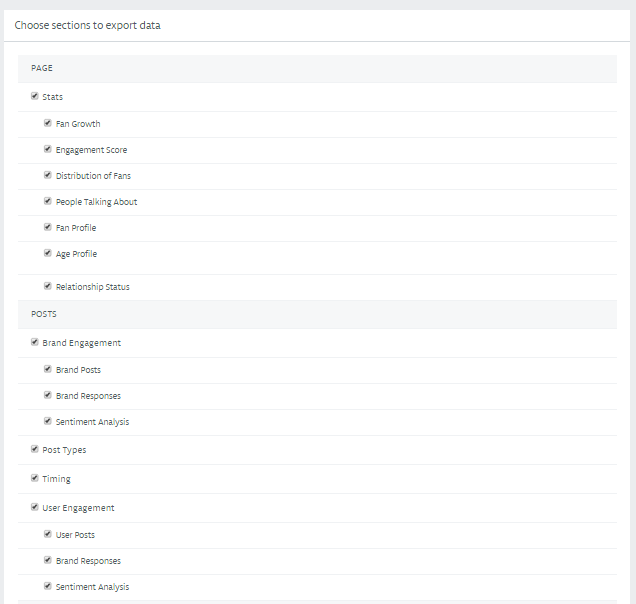
Unmetric users can download customizable reports which can be either exported in excel or power point.
Getting your goals established and metrics defined.
Day 1: Establish Goals for Social
Establishing clear social marketing goals is the first step toward transforming your strategy. Think of exactly what you want social to achieve. Here are several examples of goals you might establish for social.
Drive website traffic
Raise brand awareness
Boost brand engagement
Generate new leads
Nurture leads
Build a community around your business
Establish authority and industry expertise
The objective here is to give purpose to your social efforts. Once you’ve established your social goals, the content you produce and share should continually support those goals
The 2018 Sprout Social Media Index surveyed marketers and found this goals to be the most popular.
How are you going to define the success of your social efforts? Decide which metrics are going to provide you with the right type of data so that you can determine whether or not social was successful.
As you determine your success metrics, set clear standards for your social campaigns so that you know when success was achieved. If you are tracking audience engagement, what exactly do you consider to be successful engagement rates for your social content?
Depending on the type of content you produce, where you share, and the goals you set for your social marketing efforts, the metrics you track will change.
Day 3: List Out Your Challenges
The task is simple: make a list of the challenges you are facing when it comes to social media marketing. Think of any barriers that are keeping your social content from making its biggest impact.
As you list out your challenges, write out simple explanations of how these barriers are impacting your marketing efforts or overall business success. Here are a couple examples to help you get started.
Challenge 1:
Although we consistently post on social, we are not achieving ideal engagement levels.
Challenge 2:
We have seen a dramatic drop in our social content’s organic reach
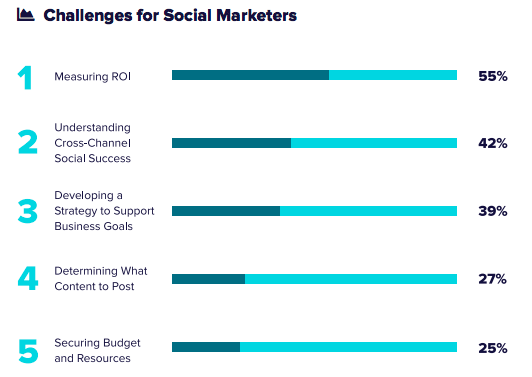
Not sure what your specific challenges may be? Our recent Sprout Social Index surveyed social marketers and found the below five challenges the most common.
Day 4: Brainstorm Solutions
Round up your marketing team and brainstorm possible solutions to the challenges you previously listed.
Be sure to provide evidence to justify how you know this will be an effective solution so that you’re prepared when the time comes to gather resources and advocate for your budget.
Solution to Challenge 1:
We can utilize influencers to engage with our social content and drive conversation.
Justification: 71 percent of influencers believe that an honest and authentic voice keeps their audience engaged (TapInfluence). With loyal followings, influencers can boost engagement and keep relevant conversations going on social.
Solution to Challenge 2:
We can invest in paid social media advertising to run highly targeted campaigns and reach the right people.
Day 5: Analyze the Competition
If you are running out of ideas, try running a competitive analysis. Be careful not to mimic the content of your competitors, but use their social strategies for inspiration.
Your brand and its competitors have similar ideal customer personas, so focus on the type of content that is most engaging, both within your own social efforts and those of the competition.
Here are a few questions to consider as you analyze your competitor’s social marketing efforts.
Which marketing channels are my competitors using and are they successful in those channels?
What are my competitors talking about and are those topics leading to high audience engagement?
Are there areas within our social strategy where we are outperforming our competitors?
Social analytics solutions are an effective way to compare your efforts against your competitors.
We can pinpoint days when our competitors experienced peak engagement and can dive deeper into what content was shared on those days so that we can gain insight into the type of content that resonates most with our target audiences.
Week 2
Optimizing your profiles and brand voice on social media.
Day 6: Determine Your Strengths and Weaknesses
Take a deep dive into your social strategy and determine where you are successful and where there is room for growth.
It might even be a good idea to conduct a survey among your marketing team to gauge where they see areas of success or room for improvement.
For each criteria regarding your social marketing strategy, determine whether it is one of your strengths or weaknesses.
Day 7: Audit Your Content
Running a social media audit to identify your best-performing content and most popular channels so that you can build future content that caters to the interests of your audience and share your content in the most effective way.
This step will improve your social media content strategy. If your posts aren’t engaging and resonating with your followers, you won’t succeed. Use your audit to review the content you’ve shared and identify which posts had the biggest impact.
For platforms like Facebook, Twitter, Instagram and other popular networks, you can use Sprout Social to quickly figure out which posts received the most engagement.
For others like Snapchat or YouTube, there are alternative options to track your content’s performance. For instance, with Snapchat you can track engagement manually with a spreadsheet or other analytics tools.
Day 8: Create a List of Relevant Keywords
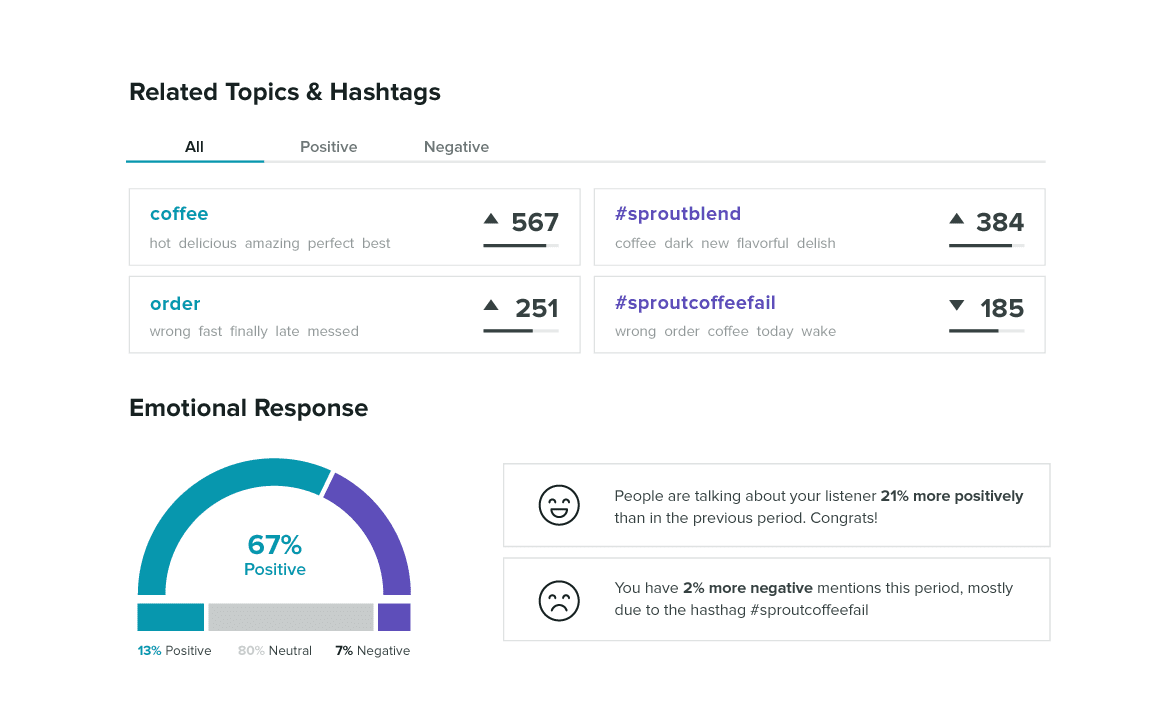
Using social media listening, you can identify the keywords most-often associated with your brand and can utilize those keywords both when sharing out content and to help guide the creation process.
For example, when people are mentioning Simply Measured, they are also talking about #influencermarketing, a keyword that has been used 493 times in conjunction with Simply Measured during the first two weeks of October. As a trending topic, we purposefully joined the influencer marketing conversation because it aligns perfectly with Simply Measured’s ability to help brands identify influencers.
From this data, we can say that our efforts to engage in the influencer discussion has gained traction and is making a positive impact on our social strategy. As we create future content, we can continue to drive the concepts and insights we have on the topic of influencer marketing and how they can impact social strategies.
Day 9: Determine Your Brand Voice
Creating a brand voice will enable you to keep a consistent voice among all of your social channels.
This voice should align with the interests of your audience and match their communication style, while staying true to your brand. Start by choosing three words that are characteristic of your brand. If your brand was a person, how would you describe them? After you choose these words, describe what that means for your brand and create do’s and dont’s for your content creation.
Day 10: Optimize Your Social Profiles
While much of your time is spent on creating content and scheduling posts, the information included on your profiles is vital to the success of your social marketing efforts.
When you’ve determined your brand voice, you can now build out your profiles to align with that voice.
At a quick glance, your profile should speak to your brand with relevant visuals and engaging copy. Here are a few tactics to optimize your social profiles.
1. Use a Consistent Profile Picture
If you own multiple social channels for your business, it is important that your profile picture is consistent across every channel. Most businesses will use their company logo or variations of their logo that have been designed specifically for their social accounts. Keeping consistent across your profiles will better your brand recognition.
2. Complete Every Section of Your Profile
This should go without saying that your profile should be filled out completely. If there is a field for information, take advantage of the opportunity to brag more about your business. In creative and succinct ways, you should be able to describe what your business does, the offerings you can provide, and how you add value into the lives of your customers.
3. Add Keywords to Boost SEO
On Day 8, you were able to compile a list of keywords relevant to your industry, brand, and its offerings. Use these strategic keywords in every section of your profile to to boost SEO. They should appear in your bio copy, in photo names, interests, and experiences.
Week 3
Finding and listening to your audience to better understand your industry.
Day 11: Develop Your Buyer Persona
Transforming your social marketing strategy may require you to either revisit your current buyer persona or to create a new one from scratch.
It’s important to develop your buyer persona so that you know exactly who you are marketing to and can create content and offerings that align with the persona you’ve identified. Start by writing down everything you know about your target customer and perform research to fill in any gaps. For a robust buyer persona, try to capture the following information.
Demographics
Backstory
Lifestyle
Career
Purchase Behaviors
Finances
Goals, Challenges, Pain Points
Day 12: Listen to Your Audience
Listening to your audience can help you gain a great amount of insight into the minds of your followers, which will enable you to be more strategic in your social marketing efforts.
Using social media listening, you can learn a lot about your audience to inform a more effective strategy.
Here’s what you should listen for when monitoring your audience on social media:
What your audience is talking about and what they are sharing most often
What your audience is saying about your brand, industry, products, services, and competitors
What your audience is sharing (including on dark social)
What your audience’s engagement level is with influencers, trending topics, and relevant events
Day 13: Research Industry Trends and Topics
In order to produce timely and relevant content and join the right conversations on social, you must stay up-to-date with what’s happening in your industry.
To establish your organization as an authority in your industry, join conversations surrounding high-interest topics. Perform ongoing research to make sure that the content you produce and share aligns with the current interests of your community. Here are a few resources that may help guide your research.
Newsletters
Webinars
Forums
Blogs
Newsletters
As social marketers, research is one of our most valuable skills, helping us make sure that our own strategies stay on par with trends in the industry. Instead of browsing aimlessly through content, rummaging through thousands of social profiles, or running endless Google searches, an easy way to streamline research is to sign up for as many newsletters as possible.
Newsletters provide insights into the state of the industry, changes in technology, updates to social networks, and explain emerging trends and best practices.
Here are a few newsletters that social media marketers should add to their resource list:
Social Media Examiner helps you discover how to best use social media to connect with customers, drive traffic, generate awareness, and increase sales. Their newsletter shares articles, expert interviews, and reviews of the latest industry research.
Social Fresh has a strong focus on the future of social marketing including future trends and inspiration for fresh social campaigns. Social Fresh provides information on conferences, articles, podcasts, research, and courses to help social marketers find inspiration and produce creative content.
MarketingProfs focuses on educating social media marketers by providing modern marketing tools, training, strategies, articles, online seminars, and discussion forums. Their solution-based content helps marketers identify gaps in their marketing strategies and provides resources needed to overcome problem areas.
Webinars
Webinars can have a huge impact on our social marketing strategies by enabling us to generate new leads and prospects, nurture existing relationships, and demonstrate expertise in our industries. During webinars, many businesses will live-tweet along with their users to engage them, answer questions, and keep the online conversation going.
Webinars can also provide a way for us to learn, which can spark content ideas during our brainstorming sessions, as they are typically education-focused. Social Media Today provides a wide variety of webinars specific to social marketers. You can register for upcoming webinars or watch from their library of on-demand webinars.
Forums
Forums provide an effective way for marketers to identify the topics that are spurring the most conversation online. Quora is a great resource to discover topics of interest, ask questions, and engage in conversations relevant to your brand. As a brainstorming tool, forums can help social marketers build social content plans that address questions people are already asking.
Blogs
Adweek (and pubs like Digiday and Marketingland) are terrific because they give you the anatomy of the latest, most creative campaigns out there, and also fill you in on the most recent news. The Mission (and Medium generally) is great to turn to for thought leadership and gauging the pulse of our industry and the visionaries in it.
Day 14: Connect with Other Departments
As you continue researching industry trends and topics as inspiration for your content creation, connect with other departments within your organization.
Remember that marketing is just one aspect of the business and other teams can provide insight about your organization that can help you brainstorm content ideas.
For example, try speaking with members of your sales team. Our sales teams are our first points of contacts with consumers, and they can provide insight into the needs, challenges, and successes of our customers. This insight can help us generate content that addresses these needs or highlights successes.
If you’re having difficulty working across social media with your team you should look into a social media collaboration tool to streamline your efforts
Day 15: Choose Your Content Types
Start thinking about the types of content that will benefit your brand the most, while keeping your audience engaged.
Refer back to the buyer persona you created to help determine if an image linking to a blog post would perform better than a Twitter chat or a Facebook Live broadcast. Consider the resources available to you to determine if you can create a highquality how-to video or if you need to scale down your efforts and create an infographic using the same content.
For best results, diversify your content to keep your audience interested. If you post the same type of content day after day or week after week, your audience will inevitably disengage.
Here’s a list of possible content types you can start incorporating into your social marketing strategies.
Memes
GIFs
Infographics
How-to’s
Polls
Contests
User-generated content
Photo and video
Before you start searching for content to share on social, you need to figure out what your audience actually likes. One way to do that is to look at past social media posts to see which were most successful.
Make sure you’re sorting your messages by the metric that is most important to you, whether that’s clicks, responses or total reach. Once you have an idea of what kind of content works best, you can move onto the next step.
Week 4
Filling out your social content calendar to increase reach and engagement.
Day 16: Develop a Posting Schedule
This step depends on a handful of different things like the company, your audience, the campaign, and the social networks being used. We cover this more in our guide to creating a social content calendar, but here are some highlights.
If you’re looking for some basic standards, though, Constant Contact wrote a post containing guidelines on how often to post to social. Here are some of the highlights:
Facebook: 3-10 times per week
Twitter: at least 5 times a day
LinkedIn: 2-5 times per week
Google+: 3-10 times per week
Pinterest: 5-10 times per day
There’s a great chance your post frequency will depend on the amount, experience and authority of your social media team, so don’t feel like you have to send out less than stellar content to meet these guidelines.
Again, your brand’s analytics can be extremely helpful here. You can use Sprout to see how often you post on each social network.
Then compare that against how much engagement you received over that same period of time.
Look for trends between publishing rate and engagement. The screenshots above are from our Facebook analytics report, but you can do the same for Twitter, Instagram and LinkedIn posts as well.
Day 17: Brainstorm Content Ideas
Now’s the time to get your creativity flowing and plan out content you know will resonate with your audience. The key to effective brainstorming is to put yourself in the mindset that inspiration can come from anywhere and from as many places as possible.
Think of what your business does well and how you can turn that into an engaging content piece. Look through some of your older content and see if you can repurpose it or reformat it for a different channel. Based on the conversations you’ve discovered are popular among your audience, how can you contribute to those conversations with fresh content? Here are some of 2017’s most popular types of content.
Video and Live Streaming
Adobe reported that 51.9% of marketing professionals worldwide name video as the type of content with the best ROI. By 2019, video content will be the driving factor behind 85% of search traffic in the US, according to Cisco, making it essential for marketers to start investing in video content.
Interactive Content
According to eMarketer, 81% of marketers agree that interactive content is more effective than typical, passive content. Think of ways in which you can add value to the lives of your customers, engage your customers through polls or surveys, or create a contest and move your audience into action.
Quizzes, for example, have serious appeal and can generate a ton of social media shares for your brand. People are excited to discover new things about themselves, which is why quizzes are so effective on social media.
User-Generated Content
Marketers have been able to utilize user-generated content to increase brand awareness, promote products and services, and use the digital world-of-mouth concept to build brand trust and increase sales.
In fact, user generated content is 20% more influential than any other type of media when it comes to influencing Millennial purchases, according to a survey by Crowdtap and Ipsos.
Day 18: Gather Resources
Once you’ve determined the types of content best suited for your business and have decided on a cadence for content delivery, start gathering your resources.
Think back to the types of content you decided to incorporate into your social strategy and what resources are needed to actualize them. Here are several questions for you to consider as you start collecting your resources.
Do you have a social analytics solution to track and analyze your social efforts?
Who within the company needs to be involved in order to create this specific content piece?
Do you need any sort of creative support for visual elements? • Do you already own content (guides, e-books, blog posts) that can easily be repurposed for social?
Day 19: Create Your Content
It’s time to get to work! Start the creation process and set reasonable timelines for project completion.
Be sure to build social content that speaks to your customer persona, stays true to your brand voice, and can easily fit within the posting schedule you’ve established.
Day 20: Optimize Your Content
During the creation process, it is essential for you to optimize your content so that your efforts don’t go unnoticed in the overcrowded social arena.
Here are a few tactics to optimize your social content to maximize your reach and increase engagement.
Include hashtags
Shorten links
Include images
Adapt content for various social channels
Week 5
Supplementing and boosting your social media content calendar for the best results.
Day 21: Create a Call To Action
Not all of the content you share on social needs to encourage customers to take action.
You may even find that some of your most popular posts are those that simply showcase your brand personality or provide a good laugh for your audience. Zulily, an online retailer, shared a picture of their Seattle hometown with the simple CTA to comment with favorite cities to explore.
If a primary goal of your social marketing is to generate new leads and guide people into your sales funnel, you need to give your audience their next step with you. Include very clear and obvious CTAs on those posts that you are using to drive action. According to CrazyEgg, most CTAs include the following components:
Offering something in order to reduce risk – giving the prospect more confidence toward the buying decision, focused on the benefits of trying it out.
Explaining what the next steps are. Should the prospect click? Download Now? Share on social?
Encouragement to act quickly, limited timeframe to respond, or an otherwise compelling reason to take action.
Day 22: Connect to More Resources
Connecting your audience to more resources can benefit your brand in a couple of ways.
First, by connecting your audience to more resources (especially owned resources) you are inviting them to learn more about your brand, industry, or related topics to keep them engaged. The more they learn about you and stay engaged with your brand, the more likely they are to convert.
At Simply Measured, we often share links to some of our favorite blog posts for our audience to learn more about the social networks, best marketing practices, and trending topics.
Day 23: Amplify Your Efforts
Once you’ve started promoting your content on social, think of ways you can amplify your messages to reach a larger audience.
Here is a small list of methods to consider in order to extend the reach of your content.
Give incentive for customers to share on their social
Use influencers to extend the reach of your content
Day 24: Put Paid Behind Your Best Content
As you promote and amplify your content, you may quickly notice that some content performs better than others in terms of engagement and conversion.
Promote these high-performing pieces even more through paid ads. You can target a highly specific audience, attract qualified traffic and leads, and grow your customer base.
The algorithms for big social networks like Facebook and Instagram are now starting to favor paid content over organic content, making it increasingly important to invest in paid to give your content a fighting chance for discovery.
Which social media network you choose will depend on 3 important factors:
Where your target customers are most concentrated
Where your target customers are most accessible
Where your target customers most actively engage with ads
Day 25: Engage with Your Audience
Digital marketing expert Jay Baer said, “A lack of response is a response. It’s a response that says, ‘We don’t care about you very much’.”
It is important to engage with and respond to your audience. Engaging with your audience in a two-way dialogue builds brand trust and adds authenticity to your brand. As you monitor your audience’s reaction to your content, you can also gain valuable insight into the effectiveness of your content.
Read through comments on your social posts and respond when appropriate. The comments section is a great tool for social marketers looking for feedback on their content and can even inspire ideas for future content if the audience is asking relevant questions and providing insightful comments.
Week 6
Reporting on your social media results and celebrating your success!
Day 26: Track Your Content
Content share tracking is an effective way to gauge engagement and track the movement of your content across social channels.
You can track all of your content with the Sprout Social Sent Messages Report. Use the Sent Messages reports to analyze published content down to the individual post and understand its performance with your audience.
Think back to the objectives you set at the beginning of these 30 days.
Going back to the example from Day 1, your objective was to boost brand engagement. In order to meet that objective, you must increase the number of likes, shares, mentions, and comments by 20% by the end of the fourth quarter.
Using Simply Measured Social Analytics, you can compare month-over-month engagement for all of your social profiles to determine if you are on track to meet your social marketing goals.
Day 28: Report Out
Share the results of your social marketing efforts with your marketing team and leadership.
This is your opportunity to showcase the goals you’ve established and your progress towards those goals. You should use hard evidence, like the data you’ve gathered through content share tracking, listening, and social analytics, to report on the success of your social marketing efforts.
With Simply Measured Social Analytics, you can prepare your report using dynamic graphs and charts to demonstrate how your content has performed through various social channels. Social Analytics helps you determine which of your channels lead to the highest conversion rates, can identify trends in engagement levels, and can place real business value on your marketing efforts.
Day 29: Revisit and Readjust Your Strategy
The most savvy marketers know that marketing strategies are in constant flux. Revisit your strategy, revise your marketing goals, and adapt your strategies based on the data you’ve collected.
Day 30: Celebrate Your Transformation
Congratulations! You’ve successfully made it through the 30-day social marketing transformation program.
Celebrate your new strategy and the effort you’ve made to enhance your social marketing.
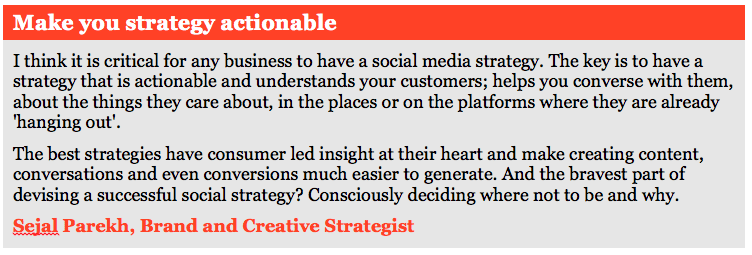
First let’s answer the question, “What is a social media strategy?”
A social media strategy defines how your organization will use social media to achieve its communications aims and the supporting platform and tools it will use to achieve this. At a basic level it’s a simple statement of intent, outlining the goals and measurable objectives for using social media, and the target outcomes you want to achieve. It does this in the context of the overall business and comms plan so that social media isn’t in a silo but working in parallel with other channels. It isn’t a detailed plan of action – you’ll also need a plan but without a clear strategy, how do you prioritize the activities for a plan? Think strategy first, plan second.
Even if you’re not actively involved in social media, other businesses are, including your competitors and most likely a significant proportion of your customers. Failing to understand that this is where many people hold conversations means you’re not part of the discussion, and you can’t influence what happen
Here are six key reasons why your organization needs a coherent social media strategy and plan.
1. Mobile – people accessing the internet via mobile increased by 60.3% to 818.4m between 2012 and 2014
2. Older user adoption – on Twitter the 55-64 year age bracket is the fastest growing demographic with 79% growth rate since 2012; the fastest growing demographic on Facebook and Google+ is the 45-54 year age bracket.
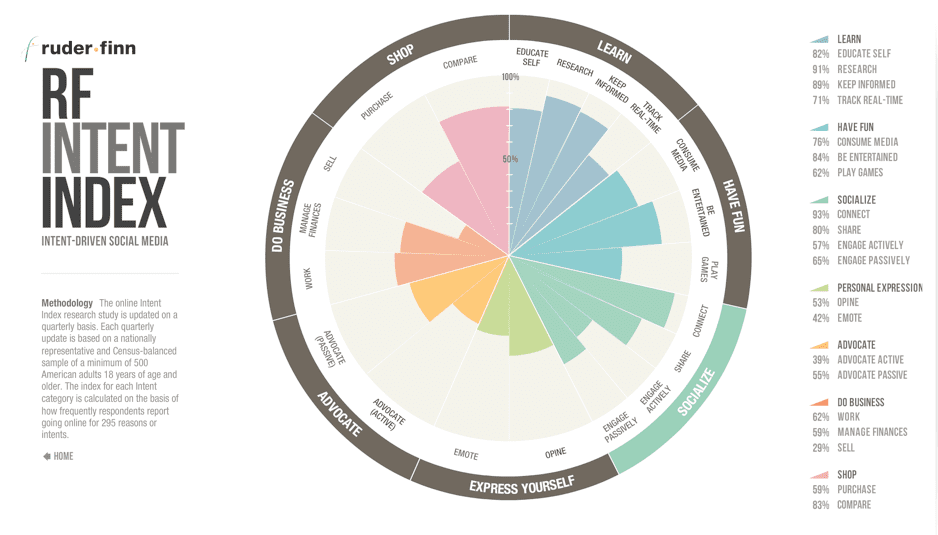
Improved mobile connectivity globally has increased ‘on the go’ social activity, from catching up on friends’ updates to sharing content and watching a video. Social media usage research in the US from Ruder Finn measures the reasons why people go online and socializing is one of the key drivers:
As people spend more time on social media, consuming more content than ever before, you might think that the space is saturated so getting involved isn’t justifiable.
Wrong!
Creating a targeted social media strategy will help you focus on using relevant platforms to connect with existing and new customers and avoid simply adding to the noise.
2. Purchasing decisions are influenced by social media
If the first era of social was audience building and engagement, the current era is focused on commerce and personalization. All major platforms have heavily invested in their advertising solutions to lure marketers with the promise of improved APIs and smart targeting, including the ability to upload email lists to run personalized remarketing campaigns.
For example, through the Facebook API marketers can:
Manage audience data for custom audience targeting
Create campaigns and ads
Build custom dashboards and run analytics
Manage campaign assets: pages, accounts etc.
Research from Crowdtap revealed that 64% of 3,000 people surveyed use social to find inspiration for shopping (up 51% vs. prior year). This is driven by retailers targeting consumers with personalized offers and deals on social networks.
Nearly half (46%) of social media users are already using social platforms while thinking about making a purchase. 40% of users are actively deciding what to buy based on what they have seen on social media platforms, including reviews and recommendations, and this is only set to grow.
Peer recommendation has the most influence on holiday gift purchases, more than blogger or celebrity endorsement. Given the importance of peak trading to the overall sales target, you need to plan how to encourage people to share and talk about your products.
There are subtle differences between the role each social network plays in the purchase cycle. For example, Pinterest is a great place for people to find inspiration and works well as a visual product storyboard. Facebook is well suited to people looking to share content and find promotions.
Without a clear strategy, how do you know what role these networks can and should play in your customers’ buying cycles? How do you know you’re not losing out on potential sales, or trying to sell to people who aren’t looking to be sold to?
3. Lack of strategy hands the advantage to competitors
It’s uncommon to find an organization without a social presence and increasingly companies are developing clear social strategies aligned with business goals.
A marketer with a strategy has a framework through which to plan, prioritize, execute, measure and optimize. This typically will lead to better results because the activity has direction, even if the direction needs to evolve and change as the marketer learns from real data.
If you invest in a social presence without a clear strategy, you won’t know whether or not your campaigns are successful. For example, if you simply post content to appear active, how do you know that content is contributing to the business positively? What if it’s actually putting people off your brand?
I once sat in a meeting where a marketing exec reported on social performance and was delighted that a tweet got more than 100 RTs over the weekend. The team decided this was a success. However, on closer inspection, the tweet included a poorly chosen hashtag and the hashtag’s and this generated the RT activity. Unfortunately, the core hashtag users weren’t relevant and certainly not a target audience.
Why did this happen?
There was no plan or guidelines in place for the marketing team to know what to post, when, how, to whom and why. For example, no research done on hashtags to define which conversations the company should and could be a meaningful part of.
With no structured approach to communication and measurement, you risk wasting resource on undirected activity. Meanwhile, savvier competitors will be working smarter at engaging customers based on clear goals, objectives and targets so performance is being measured, rather than results reported.
4. Your customers are active on social media
Mobile, social and the underlying technology have combined to provide an environment in which people can access, use and share information on their terms. Friends of mine rarely read blogs or emails; they use Facebook as their content stream. The disintermediation of content means that you have to understand the role social plays in customer communication.
Even though it’s only a subset of your total audience, it’s likely that some of your customers will want to get information from you via a social network. A good example is the rise of Twitter for customer service, with brands like BT embracing it as an effective customer enquiry and problem resolution channel. That doesn’t mean ignore traditional forms of customer service, it means updating your customer service framework to factor in social interactions.
This is why you need a strategy. Deciding how to connect with a customer is not a tactical decision, it requires strategic thinking. Social needs to align with the other communication channels so its role is defined and understood, and there are processes and tools in place to cope with demand. If you let a social marketing team simply get on with it, without the strategic vision above it, you risk inefficiency and inaccuracy. That said, Jay Baer does advise to not ‘bite off more you can chew’ in your social strategy – he says to keep the scope narrow in this article on social media strategy in 7 Steps.
5. There are key influencers in every social network
Don’t underestimate the power of peer and/or influencer recommendation.
For years retailers have known that customer ratings and reviews can increase conversion rates through the power of peer influence; feedback from another customer is typically seen as trustworthy. Expert endorsement also increases brand credibility. For example, in highly specialized tech markets like audio-visual, the experts’ opinions are highly sought after and can make or break products.
Social media channels have influencers, from the obvious celebrities to self-made social stars like video bloggers. High street retailers often employ trending influencers to amplify their marketing messages. For example, Topshop worked with five rising Instagram stars to help shoot its London Fashion Week show.
If you’re not part of their world, you’re not relevant. You risk losing mindshare to more socially aware competitors who are willing to be bold and innovative in their marketing campaigns. And if none of the key social influencers for your target audience are interested in your company and its products, it’s much harder to get your message across to the end customer.
6. Reputations can be enhanced or destroyed on social networks
There are good things that we can attribute to social media, primarily in terms of providing a voice to people and groups who previously struggled to be heard and of making information transparent and portable. However, it also amplifies the voice of discontent and vitriol is not uncommon. Jumping on angry bandwagons is also something that social seems to fuel periodically.
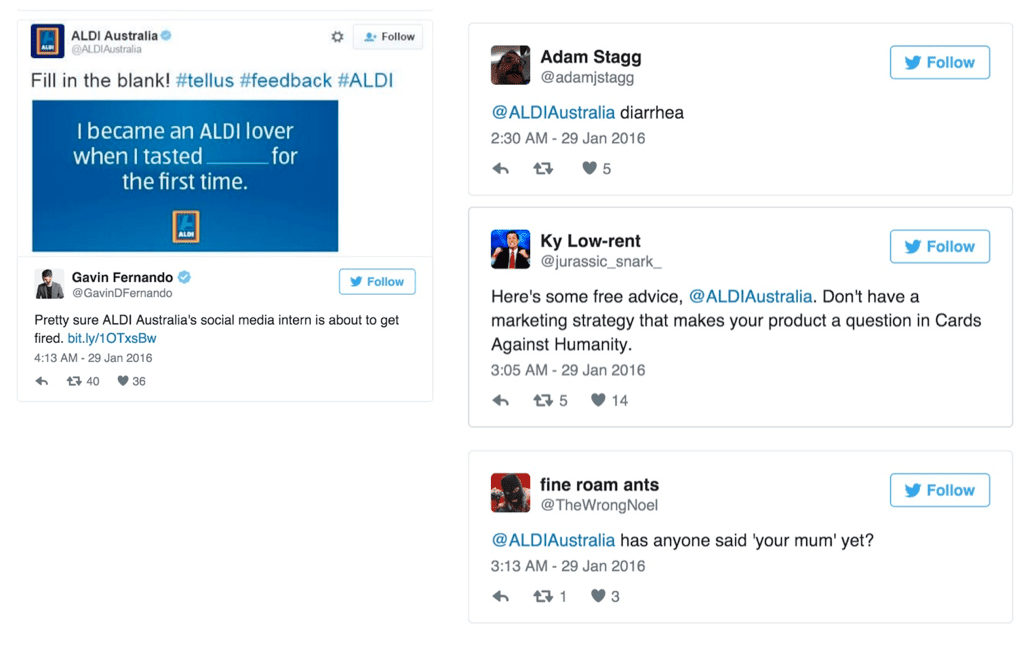
The example below is from a genuine marketing campaign that the Aldi social team launched but it attracted a lot of negative tweets and trolling.
The use of social media websites and social networks to market a company’s products and services. Social media marketing provides companies with a way to reach new customers and engage with existing customers (Radcliffe, 2017).
How Social Media Marketing can be used –
Value comes not from the platform itself but from how a particular social media platform is used. More importantly, social media applications have the potential to provide additional value beyond familiar e-commerce activities such as distributing content or driving sales because they enable the formation of online customer communities (Culan et al. 2010).
Increased Brand Recognition – New channels for your brand’s voice and content, which is important as it gives another channel for new/existing customers to find information on your brand and products. By focusing on the right channels and balancing the content, you can increase brand recognition and penetrate to your target market.
Social media channels are a key way to interact with customers and build those human relationships (Sklar, 2013). Which can be pivotal when the customer then comes to choose whether to invest in your product and can make the difference. As customers are more informed and have more choice than ever before, so if their expectations aren’t met, they’ll move on quickly (Sklar, 2013).
Specifically, social media can offer a powerful way to track your brand awareness online. This can be done in several ways. Conversation can be tracked to see what customers are saying about your firm and measure change in this over time (Frederiksen, 2015). This can be measured through ‘Social listening tools’ such as Echobot (Echobot, 2017). Also, you can track the expansion of your reach online by your number of followers, fans, and contacts.
‘Viral’ Campaigns – Can be described as an ‘internet meme’ and is often a video, image or a story that spreads rapidly across the internet. Sometimes memes are randomly spread or can be controlled (Brown, 2011). An example of this is a recent viral campaign run by Poundland on twitter, which became an instant internet hit by sharing controversial ‘elf on the shelf’ images (Shown below). Viral campaigns can create massive amounts of traffic to your social medias but however are extremely hard to pull of and tend to require the ‘bandwagon effect’. They tend to not last long and are faddish but do give a huge surge in traffic (Brown, 2011).
Promotion Tool – You can use your social media page to offer exclusive deals on products or services, which can attract customers to your page. Even use it to gain customers to other marketing channels in Chaffey’s model, such as offering a deal if you sign up to the email list (Litster, 2017).





 Roy's blog